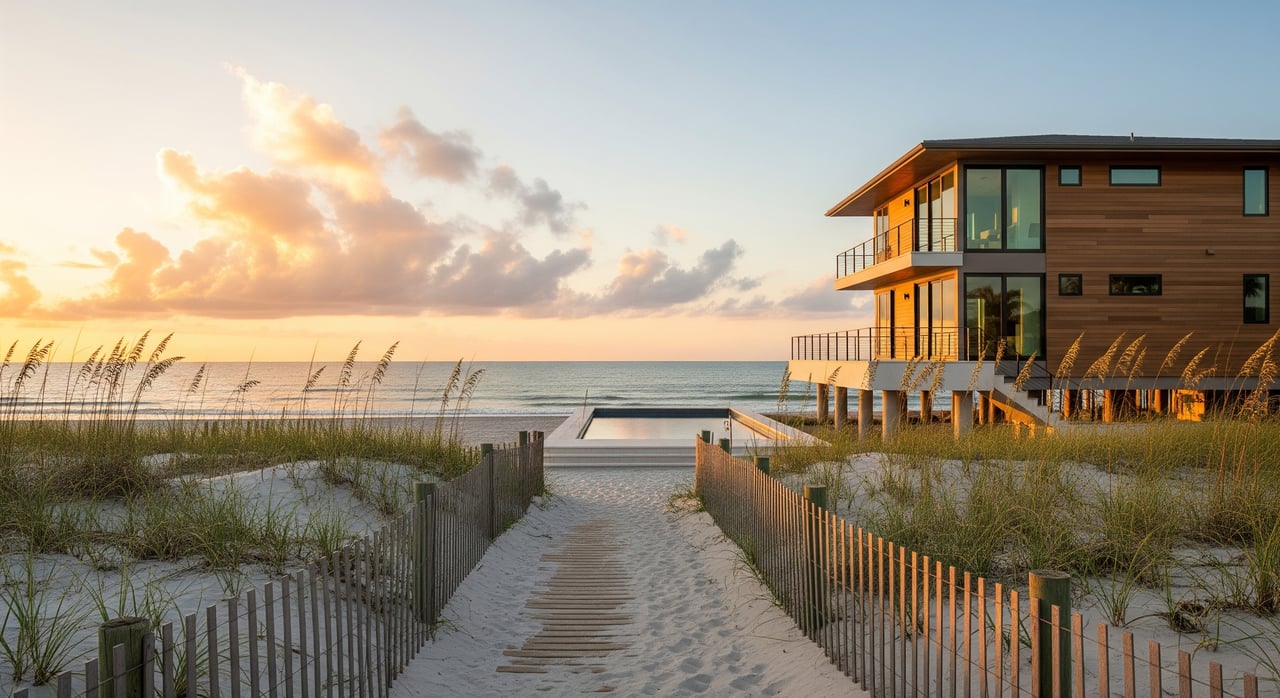
Eyeing a Gulf-front build or major remodel in Madeira Beach? You are not alone. Coastal property here is special, but it also comes with extra rules meant to protect dunes, beaches, and your long-term investment. If you understand Florida’s Coastal Construction Control Line, you can plan smarter, avoid delays, and keep your budget on track. This guide breaks down what the CCCL is, what it triggers, how to check a parcel, and the due diligence that protects you. Let’s dive in.
What the CCCL is
Florida’s Coastal Construction Control Line, or CCCL, is a state-level line drawn along beach and dune systems. It marks areas where construction gets special review to protect dunes, native vegetation, and public beaches, and to reduce storm and erosion risks. The Florida Department of Environmental Protection (FDEP) administers CCCL reviews and permits.
In Madeira Beach, many Gulf-front parcels sit close to or inside the CCCL area. That does not mean you cannot build. It means your project may need added engineering, design adjustments, and specific conditions to safeguard the beach and your structure.
Where CCCL fits among other rules
Think of CCCL as one part of a coastal permit stack. You will also deal with:
- City of Madeira Beach and Pinellas County building permits and zoning.
- FEMA floodplain rules and local elevation requirements.
- Potential federal permits from the U.S. Army Corps of Engineers if work affects submerged lands or is seaward of the mean high water line.
- Environmental Resource Permits for activities that alter wetlands or shorelines.
These programs overlap. For a Gulf-front lot, it is common to coordinate across agencies and timelines, so planning ahead is key.
Projects that trigger CCCL review
Many activities seaward of the CCCL, or that extend into the CCCL area, require FDEP approval. Common triggers include:
- New home construction that is seaward of the line or extends into the CCCL area.
- Additions or expansions that increase size or height, even on an existing home in the CCCL area.
- Elevating or raising a structure where dune or beach systems could be affected.
- Shoreline structures such as seawalls, revetments, bulkheads, or beach access walkovers and stairs.
- Site work that disturbs dunes, native vegetation, or sand transport, including grading, dune alteration, and large fill.
- Demolition and reconstruction of structures located seaward of the line.
- Placement of fill, new utilities, or hardscape in the CCCL area.
Some activities are often exempt or treated as routine maintenance. Painting or like-for-like roofing with no change in size or elevation may not require a CCCL permit. Emergency storm repairs can be expedited, but they typically must be reported and may require post-repair permitting or restoration. Always confirm the details for your site and scope.
Madeira Beach examples
- Replacing a single-family home with a larger footprint or higher finish floor on a Gulf-front lot will likely require CCCL review.
- Adding a second story may still trigger review if the home sits seaward of the line or the work affects dunes.
- Installing a new private seawall almost always requires CCCL approval and often federal and county permits as well.
- Repairing existing decking or beach stairs might qualify as maintenance, but any dune disturbance tends to require review.
How to check if a parcel is inside the CCCL
You can verify the CCCL’s location in relation to your lot with three steps:
- Review FDEP’s official CCCL map and interactive tools to see how the line relates to parcel boundaries. The state’s maps are the authoritative starting point.
- Contact the City of Madeira Beach or Pinellas County planning and building departments to check local records, past permits, or GIS layers for your property.
- Order a certified survey from a licensed land surveyor. A survey that shows the CCCL, legal boundaries, and existing structures is the most reliable document for permit applications and design.
If mapping looks ambiguous or the line crosses your lot, a site-specific confirmation from FDEP or a certified survey is typical before you proceed.
What goes into a CCCL permit application
For projects that trigger review, plan to submit a coordinated package. Typical components include:
- Property legal description and a certified survey identifying the CCCL and current structures.
- Architectural and site plans prepared by licensed professionals.
- Coastal engineering analyses on dune impacts, storm surge, and structural stability when relevant.
- Dune restoration or mitigation plans if vegetation or protective dunes will be disturbed.
- Public notice and coordination with adjacent owners or local governments when required.
You may also stack permits: CCCL from FDEP, city or county building permits, possible Army Corps authorization, and in some cases an Environmental Resource Permit. If your home is in a Special Flood Hazard Area, your design must also satisfy FEMA and local elevation codes.
Timelines and costs to expect
CCCL projects usually take longer than landward builds. Surveys, engineering, inter-agency coordination, and public notice add steps. For standard, non-emergency projects, expect weeks to months of added lead time depending on complexity. Emergency repairs have expedited pathways, but still come with reporting and documentation.
Costs are higher too. Common drivers include:
- Certified surveys and coastal engineering reports.
- State permit fees and, if applicable, federal or ERP fees.
- Mitigation and dune restoration such as native planting or sand placement.
- Specialized coastal contractors and materials.
Build in contingency for requested changes or mitigation conditions that arise during review. Early planning helps control these variables.
Due diligence checklist for buyers and owners
Use this checklist before you write an offer or set a construction schedule:
- Confirm CCCL status. Determine if the parcel is seaward of, landward of, or bisected by the line using FDEP mapping and a certified survey.
- Pull the property’s permit history. Request all historical approvals or denials from the seller and check county or city records.
- Review prior coastal work. Look for previous coastal permits, dune restoration, or beach renourishment actions tied to the lot.
- Scope your project with a specialist. Consult a coastal permitting specialist or coastal engineer to assess triggers, likely conditions, and anticipated survey, engineering, and permit costs.
- Coordinate with local offices early. Contact the City of Madeira Beach and Pinellas County Building and Planning for submittal requirements and timelines.
- Check for federal needs. Ask whether the U.S. Army Corps of Engineers must review any part of the work.
- Plan for insurance and lending. Verify lender and insurance requirements, including flood coverage and any impacts your renovations may have on premiums.
- Add schedule buffers. Include extra weeks or months in the design and construction timeline for CCCL review and mitigation.
- Write protective contract language. For purchases, add contingencies tied to CCCL feasibility, permit timing, or completion of defined due diligence steps.
Smart strategies to keep projects on track
- Front-load surveying and design. A certified survey that clearly locates the CCCL reduces back-and-forth and supports precise architectural plans.
- Choose coastal-experienced pros. Architects, engineers, and contractors who work in Pinellas County coastal zones understand typical conditions and mitigation requirements.
- Design with dunes in mind. Minimizing dune disturbance makes approval more straightforward and can lower mitigation costs.
- Anticipate conditions. Plan for dune restoration, native planting, or minor design changes so your budget and timeline stay realistic.
- Communicate with neighbors. Where public notice or adjacent-property coordination is required, proactive communication helps avoid late surprises.
If your property is landward of the CCCL
Being landward can simplify things, but do not assume every rule goes away. You still need to satisfy city and county codes, flood elevation requirements, and any applicable federal or state permits for wetlands or shoreline impacts. Sea-level rise and erosion risk remain planning factors in a coastal market like Madeira Beach.
Local offices and resources to contact
Start with these offices and professionals:
- Florida Department of Environmental Protection, CCCL program for maps and permit guidance.
- Pinellas County Building and Development Review and Planning departments for local coordination and records.
- City of Madeira Beach Building and Planning for city-specific procedures and recent code updates.
- U.S. Army Corps of Engineers for federal permits tied to coastal and submerged lands.
- Licensed land surveyors and coastal engineers with Pinellas County experience for site-specific determinations and reports.
When to involve experts
Bring in a coastal engineer and a surveyor as soon as you start sketching scope or drafting an offer. Their early analysis can confirm whether you need a CCCL permit, estimate the level of engineering required, and flag dune restoration or mitigation that could affect costs. For buyers, this input helps you write smarter contingencies. For owners, it helps you shape a design that aligns with likely permit conditions.
The right real estate advisor also adds value. A team experienced with Gulf-front transactions can coordinate the moving parts, connect you with the correct professionals, and help you negotiate timelines and risk.
The bottom line for Madeira Beach
CCCL does not stop development. It guides how you build in a sensitive and storm-exposed area. When you verify the line on your parcel, plan for the permit stack, and design with the dunes in mind, you can move forward with confidence. Early due diligence is the difference between a smooth coastal project and a costly reset.
If you are planning a purchase, rebuild, or major renovation on the Gulf in Madeira Beach, let a local, technically informed team help you navigate the path from concept to closing. Connect with the Chenault Group to align your goals with smart CCCL planning and a winning strategy.
FAQs
What is Florida’s CCCL and why does it matter in Madeira Beach?
- The Coastal Construction Control Line marks beach and dune areas where state-level review applies to protect resources and reduce storm risk, which affects how you design and permit coastal projects.
Which projects in Madeira Beach usually need a CCCL permit?
- New construction, additions that increase size or height, shoreline structures, dune or vegetation disturbance, demolition and rebuilds, and utility or fill placement within the CCCL area often trigger review.
How can I confirm whether my lot crosses the CCCL?
- Check FDEP’s official maps, verify with city or county records, and order a certified survey that locates the line relative to your property boundaries and structures.
If my home is landward of the CCCL, do I still have extra rules?
- You may avoid CCCL review, but you still must meet local building codes, flood elevation standards, and any other state or federal permits if your work affects regulated resources.
How long does CCCL permitting add to a project?
- Plan for added weeks to months depending on complexity and coordination with local and federal reviews, and start early to keep your schedule realistic.
What costs should I budget for CCCL-related work?
- Expect costs for certified surveys, coastal engineering, state and potential federal fees, and possible dune restoration or mitigation, plus specialized coastal contractors.
Can I do emergency repairs without waiting for CCCL approval?
- Emergency pathways exist, but you generally must report the work and may need post-repair permits or restoration to comply with state requirements.