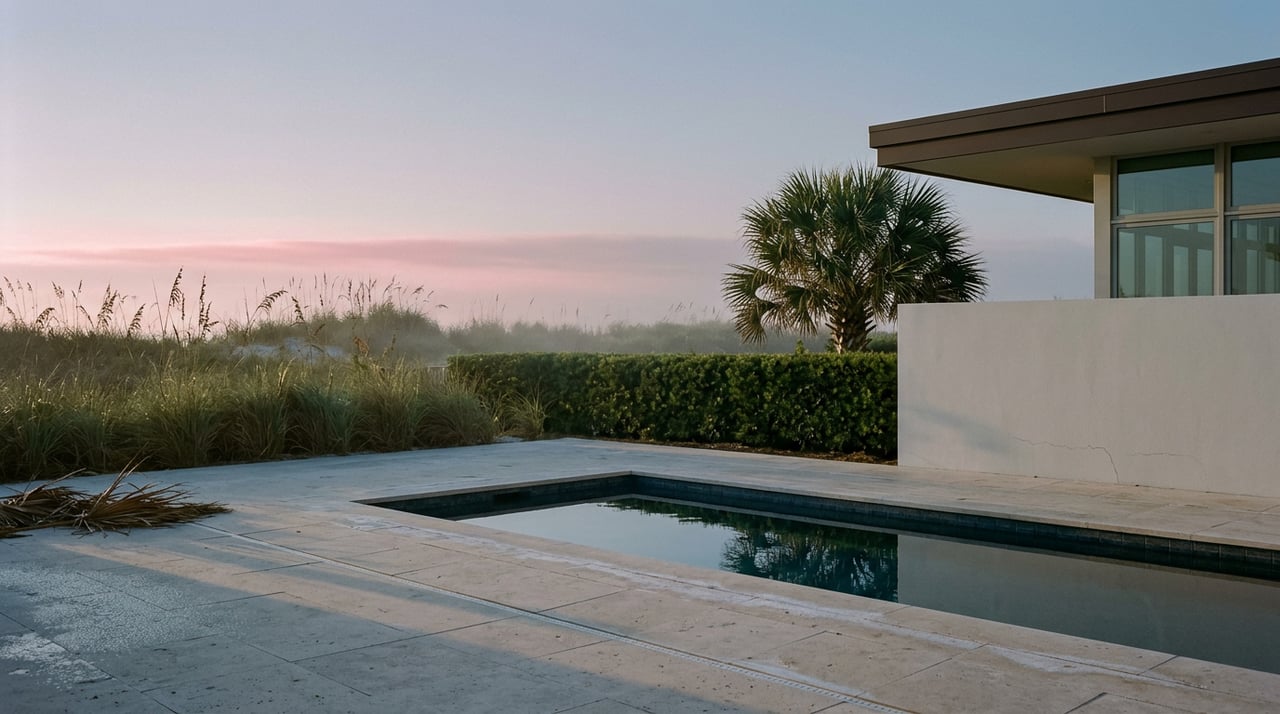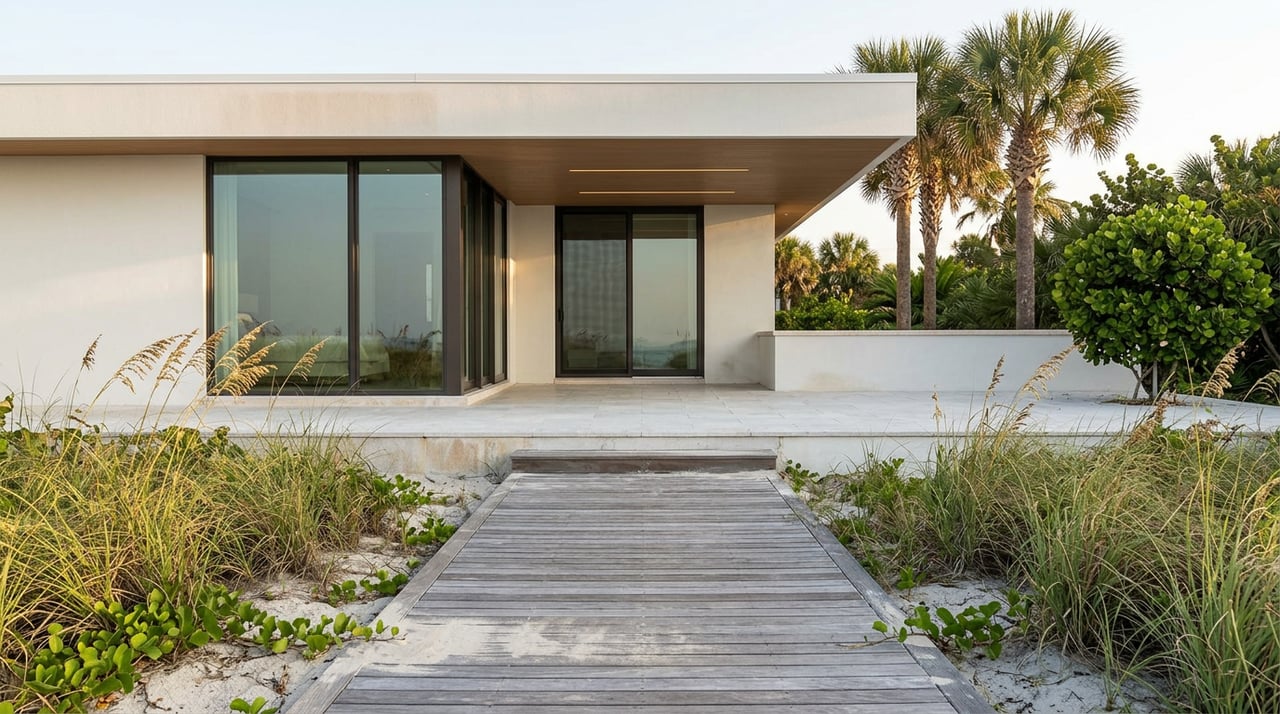
How many ways are there onto your own beach? If you live in Belleair Beach, the honest answer is four, and only one of them doesn't require a resident parking permit. According to the city's own parks page, the beach accesses sit at 6th Street, 12th Street, 19th Street, and Morgan Park. Morgan Park is the only one open to the general public, and even there the parking is metered unless you're carrying a current city permit. The other three exist for residents first.
That detail sounds like a minor civic footnote, the kind of thing that shows up in a permit application and nowhere else. It turns out to matter for reasons that have nothing to do with parking and everything to do with what happens on that sand after dark.
Ten Parks, and Most of Them Don't Face the Beach
Say "Belleair Beach has eleven public parks" to someone who doesn't live here and they'll picture eleven stretches of open sand. That's not what the list looks like. Walk through the city's own inventory and most of these parks sit on the Intracoastal side of the island, not the Gulf side: 16th Street Park, 20th Street Park, 25th Street Park, and 2nd Street Park are each described the same way on the city's site, a fishing pier, a few benches, a waterfront view. 7th Street Park adds a boat ramp to that same formula. Belle Isle Park has benches and a pet waste station. South Park, near 1st Street and Harbor Drive, has benches and a water view. Crossman Park, at the intersection of Causeway Boulevard and Gulf Boulevard, is smaller still.
The one park built for more than sitting and casting a line is Bayside Park, next to the Community Center and City Hall at 444 Causeway Boulevard. It carries a pavilion, a playground, a basketball court, a tennis court, and restrooms open from 8 a.m. to 4:30 p.m. It's the closest thing the city has to a recreation complex, and it faces the bay, not the Gulf.
Morgan Park is the outlier. It's the only park on the list built around open beach access, with a restroom, a shower, benches, and a small pavilion, and it's the sole entry point where someone without a Belleair Beach address can legally park and walk onto the sand.
So the honest description of the city's public realm is this: a generous, well-kept set of bayside fishing spots and one recreation hub, paired with a single, metered, restroom-equipped doorway to the actual Gulf beach. That's not a complaint about the town. It's a description of how the island is built, and it turns out to line up with something the biologists have been tracking for three decades.
What Thirty Years of Nest Counts Say About a Quiet Beach
In December 2024, researchers at Clearwater Marine Aquarium published an analysis of sea turtle nesting activity across north and mid-Pinellas County covering 1990 through 2022. Over that 33-year span, they counted 9,885 loggerhead crawls and more than 253,665 hatchlings emerging from nests. Nesting success across the study area came in slightly above 50 percent, higher than most of Florida's west coast. Belleair Beach was named specifically as one of the municipalities where nest counts significantly increased over that period, alongside Clearwater, Belleair Shore, Indian Rocks Beach, Indian Shores, Madeira Beach, and Treasure Island. Three other towns further south, Redington Beach, North Redington Beach, and Redington Shores, showed no change at all over the same stretch.
The study doesn't hand you a single cause for that split, but the mechanism biologists point to isn't a mystery. Female turtles and their hatchlings navigate by the brightest natural horizon, typically moonlight on open water. Artificial light from condos, streetlamps, and porch fixtures can pull them the wrong direction entirely, and heavy nighttime foot traffic on the sand can discourage a female from nesting at all. Pinellas County's own guidance on this is blunt: the biggest human-made problem for nesting turtles is light, not people directly, but what people leave switched on.
Belleair Beach happens to score low on both of the things that interfere. There's no commercial strip glowing along the Gulf side, because the town is zoned strictly residential and has no restaurants or shops within its own limits. And there's no open public parking lot funneling evening beach traffic onto the sand at three different points, because three of the four accesses are permit-gated. Fewer lights, fewer feet, a beach that stays darker and quieter after sunset than most of its neighbors. None of that proves causation on its own, but it's consistent with exactly what the county's guidance says should produce better outcomes, and it tracks with what the CMA data actually found for this specific stretch of sand.
The Season Isn't Winding Down. It's Peaking.
It's easy to assume that by late September, turtle season in Pinellas County is basically over. It isn't. County and Clearwater Marine Aquarium guidance both put the season at May 1 through October 31, and loggerhead eggs take roughly 45 to 70 days to incubate. Do the math on a nest laid in late July or early August and you land squarely in late September and early October for hatching, not April. The final five weeks of the season, the stretch this piece is landing in, are typically when a large share of the summer's hatchlings are actually making their run to the water, which means the lighting and beach-clutter rules matter more right now than they did back in May, not less.
There's a three-part shorthand for what helps most. Keep it clean: no food scraps or trash left behind, since they draw raccoons and crows that prey on hatchlings. Keep it dark: porch and deck lights off, curtains closed, no flashlights or phone lights aimed at the sand. Keep it flat: fill in holes and knock down sandcastles before leaving for the night, since a foot-deep hole can trap a hatchling that's only a few inches long.
Belleair Beach's own calendar has a piece of this built in. A Beach Clean-up is scheduled for Saturday, October 3, from 8 to 9 a.m., which lands right in the middle of this final hatching stretch. It's a small window, one hour, but it's timed well for exactly the "clean" half of the county's guidance, clearing debris off the sand during the weeks when hatchlings are most likely to be using it.
The Marina Side of the Same Island
None of this means the island is quiet everywhere. The Belleair Beach Municipal Marina gives residents water and electric hookups, a fuel dock, and access to the Intracoastal Waterway and the Gulf beyond it, with small-craft rentals, kayaks, canoes, paddleboards, running out of the same stretch alongside half-day and full-day fishing charters. A separate boat ramp at 7th Street Park offers another way onto the water. That's the other half of how the island actually gets used day to day. The Gulf side stays dark, permit-gated, and mostly quiet after sunset. The bay side runs on boat traffic, fishing piers, and a recreation hub built around a basketball court and a tennis court at Bayside Park.
Two sides of the same 1.7 square miles, running on almost opposite rhythms, and both of them shaped by decisions the city made about parking, permits, and what kind of development belongs where. The eleven-park number sounds like abundance until you see what's actually behind each name. The nesting data suggests that restraint has been paying off for longer than most residents probably realize.
We spend a lot of time on this stretch of Pinellas County, on both sides of the causeway, and the small civic details like a permit list or a beach cleanup schedule tend to tell you more about a place than a listing photo ever will. If you're weighing a move to Belleair Beach or already call it home and want a straight read on how these small towns actually function, Chenault Group is glad to talk it through.